Where to Sell Gold in Malaysia: 5 Options Compared
Last updated: 20 November 2026
1Where Can You Sell Gold in Malaysia?
Quick Answer: You can sell gold in Malaysia at five kinds of places: specialist gold buyers, jewellery shops, pawnshops and Ar-Rahnu counters, banks, and private buyers online. They are not equal. Each one accepts different kinds of gold, pays in a different way and keeps a different share of the gold value. The right choice depends on what you are selling.
Most guides on where to sell gold in Malaysia simply list these places. That leaves out the question that decides your payout: what exactly are you selling? A broken 916 chain, a 100 g bar, a Kijang Emas coin and gold in a bank account each have a different best home.
This guide compares the five options by what they accept, how they pay and roughly how much of your gold’s value reaches your pocket. AnyGold is a gold buyer at Sungei Wang Plaza, Kuala Lumpur that buys every purity from 999.9 down to 375, so we explain each option from the counter side. Every RM figure is a worked example at an illustrative rate of about RM 540 per gram of pure gold. None of them is today’s price.
Already know you want to sell?
Bring it to our counter: we weigh your gold in front of you and test it in our testing room. Visit us at Sungei Wang →
The short video below, from a US refiner, walks through the same choice from the seller’s side: why some places pay more than others for the same gold.
Where to Sell Your Gold and Jewellery for the Best Price
Source video: Specialty Metals Smelters & Refiners on YouTube
2What Are the 5 Places to Sell Gold?
Quick Answer: The five places to sell gold in Malaysia are a specialist gold buyer, a jewellery shop, a pawnshop or Ar-Rahnu counter, a bank, and a private buyer online. Only the first two are true sales for most people’s jewellery. A pawn is a loan, a bank deals mainly in its own gold accounts, and a private sale has no testing.
- Specialist gold buyer. Buys gold outright for its metal value: jewellery, broken pieces, bars and coins. Pays on the spot, in cash or by instant transfer.
- Jewellery shop. Many shops buy back gold, often 916 jewellery. Some prefer a trade-in against a new piece over a cash sale.
- Pawnshop or Ar-Rahnu. Lends you money against your gold. You keep the right to redeem it, but it is a loan with monthly charges, not a sale.
- Bank. Banks that offer gold accounts buy back gold held in those accounts. They do not generally buy loose jewellery over the counter.
- Private buyer online. Marketplace listings can attract buyers, but there is no scale, no test and real risk at the meet-up.
The short answer for most sellers is the first option. A specialist buyer is set up to weigh, test and price every purity. That is why our guide on how to spot a trusted gold buyer in Malaysia focuses on what happens at that counter. The others suit narrower situations, covered below.
3Which Option Pays the Most for the Same Gold?
Quick Answer: For the same 20 g 916 bangle, a specialist gold buyer usually pays the most cash you keep. In our illustrative example it pays about RM 9,598, a jewellery shop buyback about RM 9,104, and a pawn loan about RM 6,927 that you must repay with charges. A bank generally will not take loose jewellery at all.
| Where | Type of deal | Illustrative cash (share of gold value) |
|---|---|---|
| Specialist gold buyer | Outright sale | RM 9,598 (about 97% of gold value) |
| Jewellery shop, cash buyback | Outright sale | RM 9,104 (about 92% (design and shop margin)) |
| Pawnshop or Ar-Rahnu loan | Loan, must repay | RM 6,927 (about 70%, and you owe it back) |
| Private buyer online | Outright sale | RM 8,906 (anywhere from 80% to 100%; untested) |
| Bank | Usually not accepted | Not available (loose jewellery generally not bought) |
Illustrative scenario by AnyGold, 2026. Gold value about RM 9,895 (20 g x 91.6% x about RM 540/g pure, at USD 4,000/oz and RM 4.20 per USD). All shares are hypothetical; real rates differ by shop and by day. Not a quote. Licence.
The gold inside the bangle is worth about RM 9,895 in this example. What changes from row to row is how much of that value the other side keeps, and whether the money is yours to keep. A pawn gives the smallest figure and it is a debt, not income.
A private sale looks tempting because a buyer might pay close to full value. In practice nobody tests the purity, so the price is a guess on both sides. For how a fair per-gram figure is built, see our guide on how a 916 payout is worked out.
4Which Places Accept Jewellery, Bars, Coins and Broken Gold?
Quick Answer: Specialist gold buyers accept the widest range: jewellery, broken gold, bars, coins and every purity from 999.9 to 375. Jewellery shops focus on jewellery, often 916. Pawnshops lend against most gold. Banks mainly buy back gold from their own accounts or products. Private buyers rarely want broken or low-purity pieces.
| Where | Jewellery | Broken gold | Gold bars | Gold coins | Same-day payment |
|---|---|---|---|---|---|
| Specialist gold buyer | Yes | Yes | Yes | Yes | Yes |
| Jewellery shop | Yes | Some | Some | Some | Yes |
| Pawnshop or Ar-Rahnu | Yes | Some | Some | Some | Loan only |
| Bank | No | No | Some | Some | For its own gold accounts |
| Private buyer online | Some | No | Some | Some | No |
Summary by AnyGold, 2026, of what each type of buyer usually accepts. “Some” means it depends on the shop, brand or product; check before you go. Licence.
This grid explains why one place rarely fits a mixed drawer of gold. A bag holding a broken 916 chain, an 18K ring and a 10 g bar needs a buyer that handles all three without splitting the visit.
- Broken or tangled pieces. Paid by weight and purity at a specialist buyer; jewellery shops may decline or discount them.
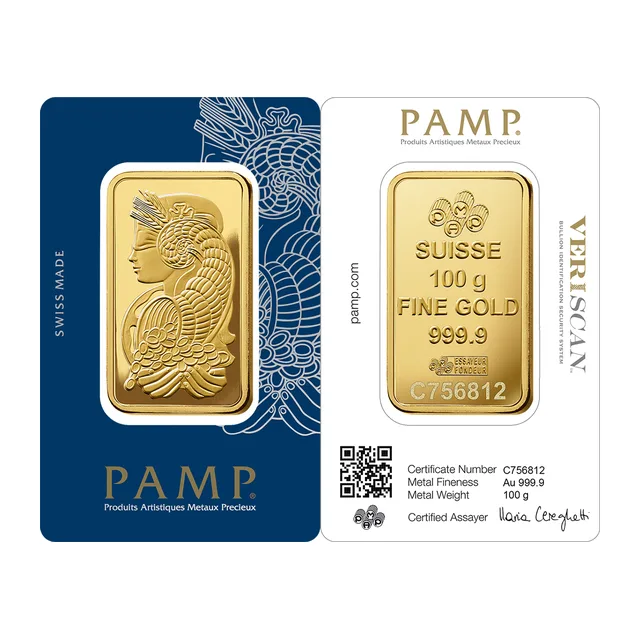
- Bars and coins. Best sold where the purity can be tested and the bar or coin identified; our guide to selling gold bars in Malaysia covers what buyers check.
- Low purities like 375 and 585. Often turned away elsewhere; a buyer of all purities will pay for them.
Got a mixed bag of gold?
AnyGold buys every purity, from 999.9 bars to 375 jewellery, in one visit. See what to bring to a Kuala Lumpur gold buyer →
5Is a Jewellery Shop Trade-In Better Than Selling for Cash?
Quick Answer: A trade-in is only better if you already want a new piece from that shop. It credits your old gold against new jewellery, but you then pay workmanship and a retail margin on the new item. If you want money, a cash sale keeps the full payout in your hands. In our example, the trade-in still needs a RM 1,791 top-up.
| Line item | Cash sale | Trade-in for a new chain |
|---|---|---|
| Value of your old 20 g 916 bangle | RM 9,598 | RM 9,400 (credit, not cash) |
| Cash in your pocket today | RM 9,598 | RM 0 |
| New 20 g 916 chain (gold + 4% margin) | Not bought | RM 10,291 |
| Workmanship on the new chain (RM 45/g) | Not paid | RM 900 |
| Top-up you pay for the new chain | Not applicable | RM 1,791 |
Illustrative scenario by AnyGold, 2026, at about RM 540/g pure. Cash share 97%, trade-in credit 95%, new-chain margin 4% and workmanship RM 45/g are hypothetical. Real shop terms vary. Licence.
Trade-ins feel generous because the credit is often a little higher than a cash quote. The catch is the new piece. Workmanship alone costs RM 900 in this example, and you never get it back when you sell later. That is why our guide on why shops quote different 916 prices separates the buyback rate from the retail price.
6Should You Pawn or Sell Your Gold?
Quick Answer: Sell if you do not plan to get the piece back. Pawn or use Ar-Rahnu only if you need cash for a short, certain period and can repay on time. A loan pays less up front, adds a monthly charge, and the gold can be auctioned if you miss repayment. A sale has no ongoing cost.
Pawnshops and Ar-Rahnu counters are useful for one job: keeping a piece you love while you bridge a short cash gap. They are not built to pay the full value of gold you no longer want.
- Choose a sale when the gold is unworn, broken, or you have no plan to redeem it.
- Choose a loan when the piece matters to you and you know the date you will repay.
- Avoid a loan when repayment is uncertain; charges keep adding up and the gold can be lost.
Our guide to cash for gold in Malaysia sets out the month-by-month cost of a gold loan next to a same-day sale.
7How Much Does the Choice Matter as Your Gold Adds Up?
Quick Answer: The bigger your lot, the more the choice of buyer matters. A five-point difference in the share of gold value is about RM 247 on 10 g of 916 but about RM 2,474 on 100 g in our illustrative example. For one small ring the gap is modest. For a family collection it can run into thousands of ringgit.
| Amount of 916 gold | Buyer paying 97% | Buyer paying 92% | Difference to you |
|---|---|---|---|
| 10 g of 916 | RM 4,799 | RM 4,552 | RM 247 |
| 20 g of 916 | RM 9,598 | RM 9,104 | RM 495 |
| 50 g of 916 | RM 23,996 | RM 22,759 | RM 1,237 |
| 100 g of 916 | RM 47,992 | RM 45,518 | RM 2,474 |
| 200 g of 916 | RM 95,984 | RM 91,036 | RM 4,948 |
Illustrative scenario by AnyGold, 2026, at about RM 540/g pure (USD 4,000/oz, RM 4.20 per USD). Both shares are hypothetical. Not today’s rate. Licence.
This is why comparing two quotes is worth the trip once you have more than a few pieces. Take the itemised slip from the first buyer to the second and compare piece by piece: weight, tested purity and rate. Our 916 vs 999 purity guide explains why a purity read a few points low also costs real money at larger weights.
8What Should You Check Before Selling Gold Anywhere?
Quick Answer: Wherever you sell gold, check five things: the scale is in view, purity is tested rather than assumed, the day’s rate is shown before weighing, the quote is itemised by piece, and your ID is checked. A place that skips these steps may be quick, but you have no way to know whether its price is fair.
- The scale is in view. Trade scales fall under the Weights and Measures Act 1972; ask to see each reading.
- Purity is tested, not assumed. Stamps can be wrong. A test protects both sides; our guide on how to know fake gold explains the common signs.
- The rate is shown first. A fair buyer tells you the day’s rate before weighing.
- The quote is itemised. Weight, purity and value for each piece, not one lump sum.
- Your ID is checked. A proper buyer asks for your IC, passport or valid ID for every sale; it is standard practice.
Be wary of anyone promising prices well above the market, or offering gold “investment” returns alongside a purchase. Bank Negara Malaysia keeps a Financial Consumer Alert List of unlicensed schemes worth checking before you hand over money or gold.
9Where Should You Sell Gold in Your Situation?
Quick Answer: Match the place to your situation. Mixed jewellery, broken gold and bars go to a specialist gold buyer. A planned upgrade suits a jewellery shop trade-in, and a short-term need you will repay suits a pawn or Ar-Rahnu. Gold in a bank account is sold back through that bank. Private online sales rarely suit anyone.
| Your situation | Usually the best place |
|---|---|
| Mixed jewellery, broken gold, any purity | Specialist gold buyer |
| Gold bars or coins | Specialist gold buyer that tests and identifies bars |
| Want a new piece from the same shop | Jewellery shop trade-in |
| Need cash briefly, will redeem soon | Pawnshop or Ar-Rahnu |
| Gold held in a bank gold account | Sell back through that bank |
If you are in or near Kuala Lumpur, our guide to a gold buyer in Kuala Lumpur lists what to bring and what the visit looks like. For bars specifically, the AnyGold gold bars page shows the bar sizes AnyGold deals in.
10Conclusion: Choose the Place That Fits Your Gold
Where to sell gold in Malaysia comes down to two questions: do you want a sale or a loan, and what form is your gold in? For outright sales of jewellery, broken gold, bars and coins, a specialist gold buyer usually keeps the smallest share. It also weighs in front of you, shows you the test reading and pays on the same day.
Compare offers as a share of gold value, get itemised quotes on larger lots, and treat pawn tickets as debt. Read the AnyGold FAQ for common questions, or visit AnyGold at LG.142 Sungei Wang Plaza for a live quote.
11Frequently Asked Questions
1. Where is the best place to sell gold in Malaysia?
For jewellery, broken gold, bars and coins, a specialist gold buyer that weighs in front of you and explains the purity result usually pays closest to the gold value, on the same day. Jewellery shops, pawnshops and banks suit narrower situations.
2. Can I sell gold jewellery to a bank in Malaysia?
Generally no. Banks that offer gold accounts buy back gold held in those accounts or their own products. Loose jewellery is usually sold to a gold buyer or jewellery shop.
3. Is pawning gold the same as selling it?
No. A pawn or Ar-Rahnu deal is a loan secured on your gold. You get less cash, pay a monthly charge, and can lose the gold if you do not repay. A sale is final and has no ongoing cost.
4. Do jewellery shops buy back gold from other shops?
Many do, especially 916 jewellery, but terms vary. Some pay less for pieces they did not sell, or prefer a trade-in against a new item instead of cash.
5. What do I need to bring to sell gold?
Bring your IC, passport or valid ID, every piece you might sell, and any receipts or assay cards for bars and coins. ID is checked for every sale, so the sale cannot go ahead without it.
Not sure where your gold fits?
Visit AnyGold at LG.142 Sungei Wang Plaza, Bukit Bintang. Every purity is weighed in front of you and tested in our testing room, and you are paid on the spot.
Contact AnyGold today →