How to Know Fake Gold: 10 Ways to Verify Real Gold at Home
Last updated: 25 November 2026
1How Do You Know If Gold Is Fake?
Quick Answer: You know gold is fake when a reliable test shows a metal other than the purity stamped on it. Home tests can expose crude fakes such as brass or steel, but they cannot measure purity. Only a professional test, such as an X-ray (XRF) reading, tells you for certain what a piece contains.
Inherited chains, a bangle bought online, a “999.9” bar from a stranger: most people hold gold without knowing if it is solid, plated or fake. It pays to learn how to know fake gold: a plated copy of a solid necklace holds almost no gold.
This guide from AnyGold, a Kuala Lumpur gold buyer at Sungei Wang Plaza, covers the ten common checks, honestly: which work, which mislead and which can harm your gold. The in-store version is our separate guide on how gold buyers check if gold is real.
Money figures use a fixed illustrative rate of RM 540 per gram of pure gold, not today’s price.
Want a straight answer instead of guessing?
We X-ray test gold for free in front of you, with no obligation to sell. Book a free gold test →
2What Types of Fake Gold Should You Watch For?
Quick Answer: The fakes you are most likely to meet are gold-plated base metal, gold-filled jewellery, gold-coloured brass with no gold at all, real gold stamped with a higher purity than it is, and bars with a tungsten core under a gold skin. Each type fools a different set of tests, so knowing the type tells you which check to trust.
| Type | What it is | How much real gold |
|---|---|---|
| Gold-plated | Thin gold over brass, copper or silver | Almost none |
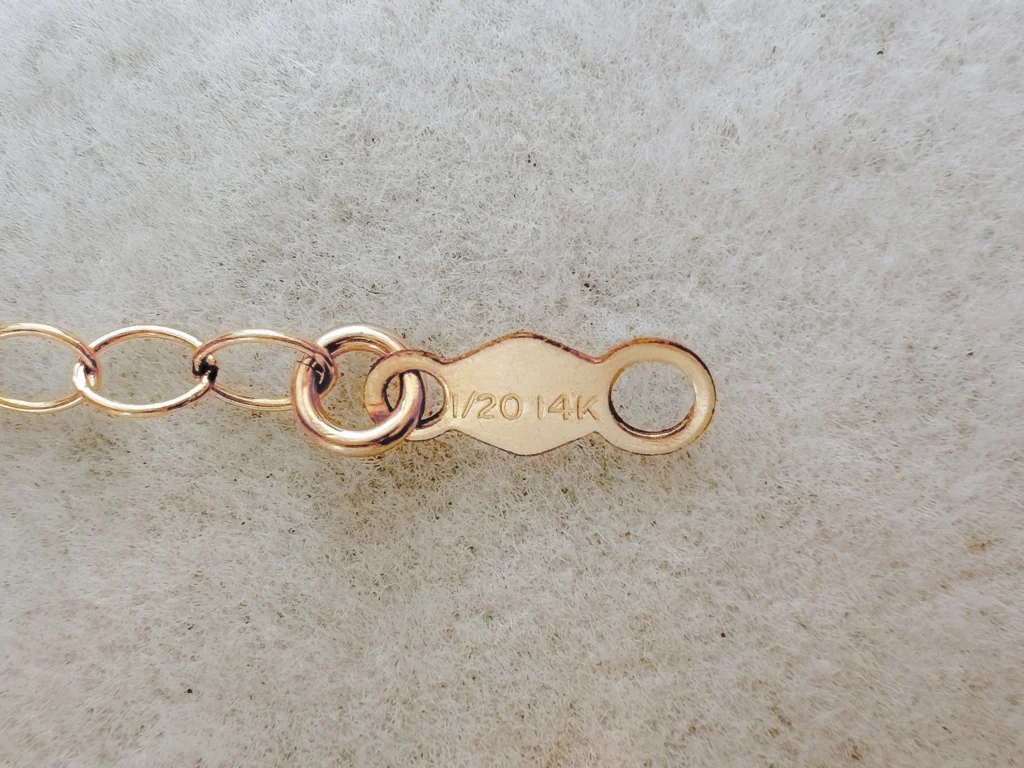
| Gold-filled (GF) | A thicker gold layer bonded to base metal, e.g. “1/20 14K GF” | About 3% of the weight |
| Gold-coloured brass | Copper and zinc alloy, no gold at all | None |
| Over-stamped gold | Real gold stamped higher, e.g. 375 marked 916 | Less than the stamp says |
| Tungsten-core bar | Tungsten inside, real gold outside | Only the outer layer |
Over-stamped pieces are genuine gold, just less of it. Stamps such as GP, HGE, RGP and GF mean a surface layer, not solid gold. Our 916 vs 999 purity guide explains what each honest stamp should mean.
3The 10 Ways to Verify Real Gold, Ranked by Reliability
Quick Answer: Of the ten common ways to verify real gold, only three give a dependable answer: X-ray (XRF), acid testing and, to a lesser degree, an electronic tester. The seven home tests, from the stamp check to the vinegar soak, can rule out crude fakes but cannot confirm purity, and two of them can damage real gold.
| Method | Cost | Time | Damages gold? | What it really catches | Reliability |
|---|---|---|---|---|---|
| 1. Hallmark check | Free | 1 min | No | Plating marks; fakes can be stamped too | 2 / 5 |
| 2. Magnet test | Low (strong magnet) | 10 sec | No | Steel or iron only | 2 / 5 |
| 3. Weight and feel | Free | 1 min | No | Light brass, with a real piece to compare | 1 / 5 |
| 4. Skin reaction | Free | Days of wear | No | Worn plating over copper or brass | 1 / 5 |
| 5. Water sink test | Free | 1 min | No | Almost nothing | 1 / 5 |
| 6. Ceramic scratch | Low (unglazed tile) | 2 min | Yes, a scratch | Thin plating that rubs through | 2 / 5 |
| 7. Vinegar soak | Free | 15 min | Can dull stones | Bare copper or brass | 1 / 5 |
| 8. XRF (X-ray) | Free at AnyGold | Seconds | No | Exact surface purity | 5 / 5 |
| 9. Acid test | Kit needed | 3 min | Yes, scratch and acid | Rough karat range | 4 / 5 |
| 10. Electronic tester | Device needed | 15 sec | No | Rough purity | 3 / 5 |
AnyGold assessment, 2026. Reliability scores are our judgement of how well each test separates real from fake gold, not a lab study. Licence.
Every free home test scores two or less. They still help: a magnet that sticks or a “GP” stamp saves you a trip.
4Tests 1 to 3: Hallmark, Magnet and Weight
Quick Answer: Start with the three tests that cannot harm anything. Look for a purity stamp with a magnifier, hold a strong magnet close to the piece, and compare its weight in your hand with a similar item you know is real. Together they take two minutes and screen out the cheapest fakes.

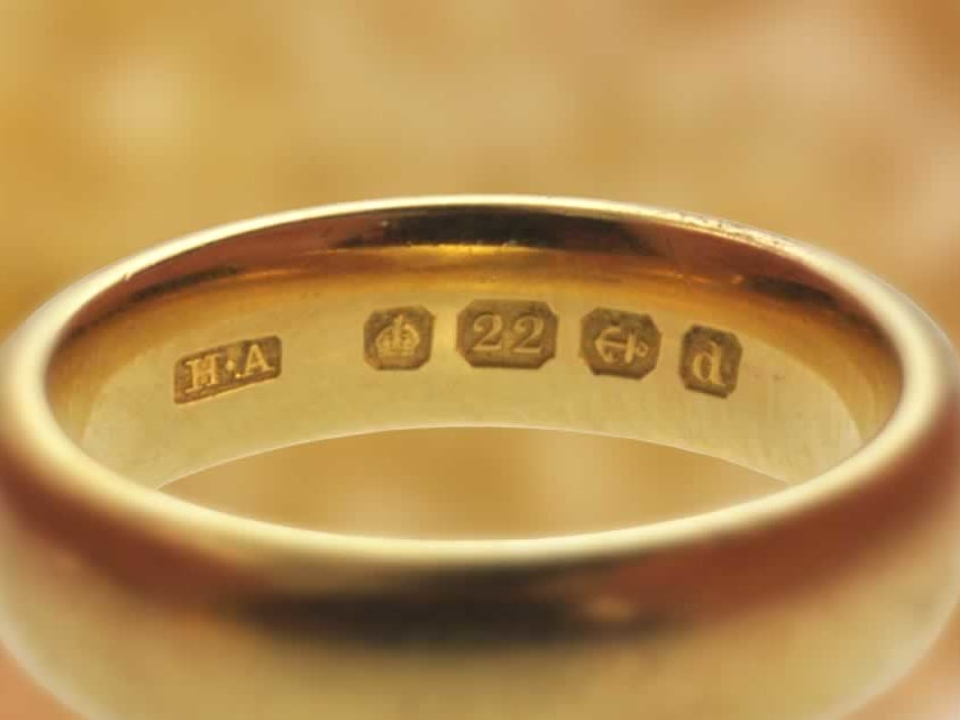


- Hallmark check. Look inside ring bands, on clasps and on pendant backs for 999, 916, 750, 585 or 375. Plating marks (GP, HGE, GF) settle it. But a stamp is only a claim: fakers stamp “916” too.
- Magnet test. Gold is not magnetic, so a piece that jumps to a strong magnet has iron or steel inside. The catch: brass, copper, silver and tungsten are not magnetic either, so most good fakes pass.
- Weight and feel. Gold is over twice as heavy as brass for its size, but you need a known real piece to compare, and hollow real chains feel light.
5Tests 4 to 7: Skin, Water, Ceramic and Vinegar
Quick Answer: Skin marks, the water sink test, the ceramic scratch and the vinegar soak are the most shared home tests, and the least reliable. The water test catches almost nothing, because brass and copper sink too. The ceramic scratch and vinegar can damage real gold or stones, so use them last, if at all.
- Skin reaction. Green marks usually mean copper or brass showing through worn plating. Low-karat real gold can also stain skin, so a mark is a hint, not proof.
- Water sink test. Real gold sinks, but so do brass, copper, steel and tungsten. Only plastic or hollow fakes float, so this test tells you very little.
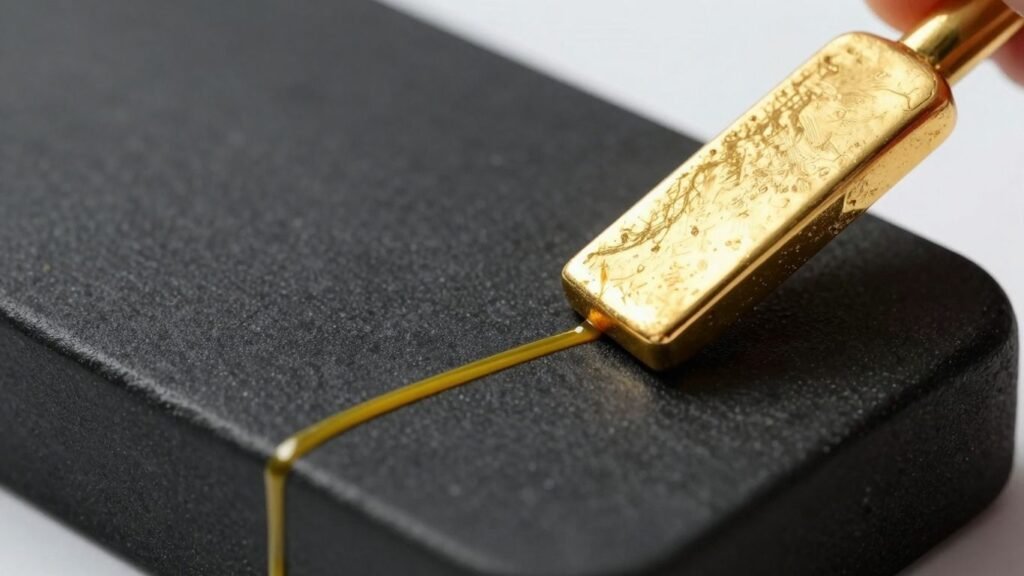
- Ceramic scratch. Dragging gold across unglazed tile leaves a gold streak; a dark streak suggests base metal. It also scratches your piece, and thick plating still leaves a gold streak.
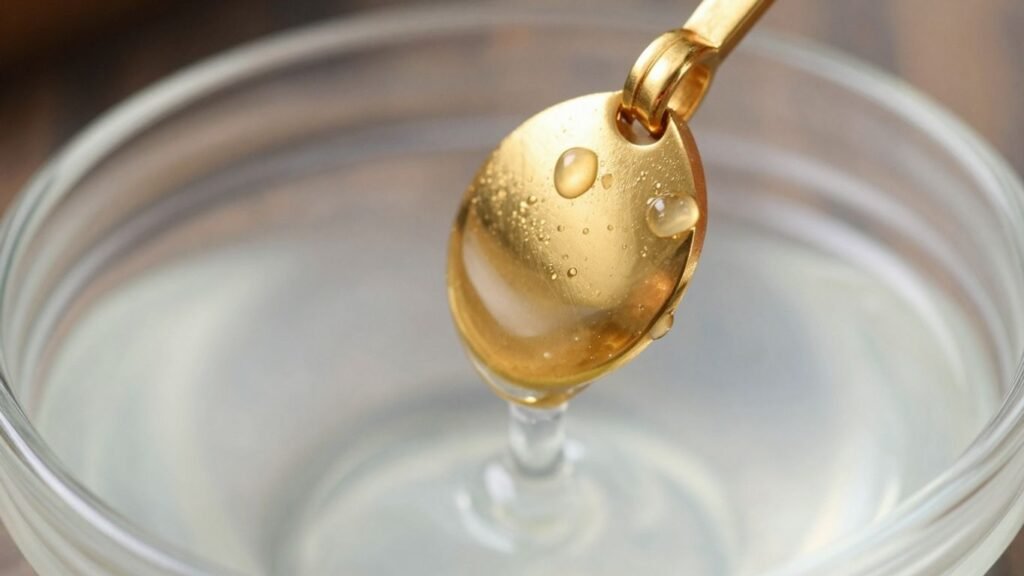
- Vinegar soak. Bare copper or brass may tarnish after 15 minutes. Plating protects the base metal, so plated fakes usually pass, and acids can dull pearls and some stones.
6Which Home Tests Miss Fakes or Wrongly Flag Real Gold?
Quick Answer: Gold-filled jewellery and tungsten-core bars pass all five common home tests, and gold-plated brass passes at least three. Real gold can fail them too: a steel clasp spring trips the magnet, a hollow chain feels light, and a genuine 9K bracelet can tarnish or streak pale. Home tests err in both directions.
| What you hold | Magnet | Weight feel | Water sink | Vinegar | Ceramic streak | Result |
|---|---|---|---|---|---|---|
| Gold-plated brass | Missed | Maybe | Missed | Missed | Maybe | Missed 3 of 5 |
| Gold-filled (GF) | Missed | Missed | Missed | Missed | Missed | Missed 5 of 5 |
| Tungsten-core plated bar | Missed | Missed | Missed | Missed | Missed | Missed 5 of 5 |
| Gold-coloured brass, no gold | Missed | Caught | Missed | Caught | Caught | Missed 2 of 5 |
| Real 916 with steel spring clasp | False alarm | Passes (correct) | Passes (correct) | Passes (correct) | Passes (correct) | 1 false alarm |
| Real hollow 916 chain | Passes (correct) | False alarm | Passes (correct) | Passes (correct) | Passes (correct) | 1 false alarm |
| Real 9K (375) bracelet | Passes (correct) | False alarm | Passes (correct) | Slight tarnish | False alarm | Up to 3 false alarms |
AnyGold assessment, 2026, based on how each metal behaves. “Missed” = a fake passes; “False alarm” = real gold looks fake. Results vary with plating thickness and wear. Licence.
The fakes worth worrying about, filled gold and tungsten-core bars, are made to beat exactly these checks. False alarms cost money too: people undersell real 9K and hollow 916 pieces because a kitchen test “failed”. A buyer pays for gold by tested purity, and our guide on how gold buyers test and pay you shows how that reading becomes a price.
7Tests 8 to 10: XRF, Acid and Electronic Testers
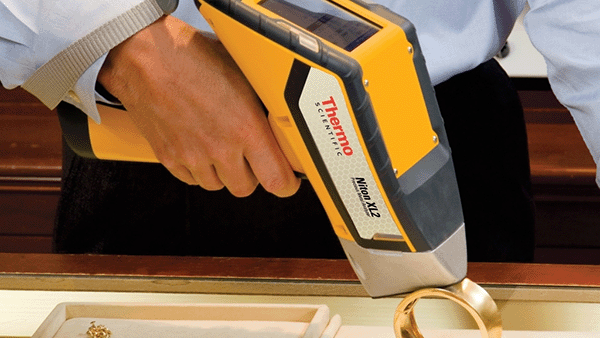
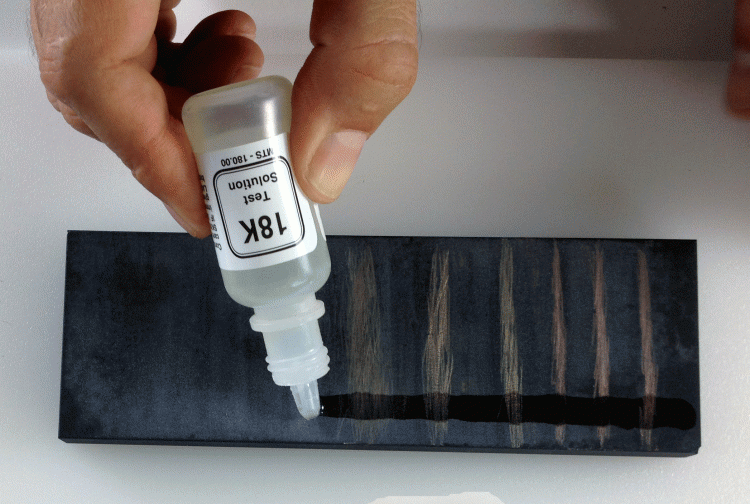
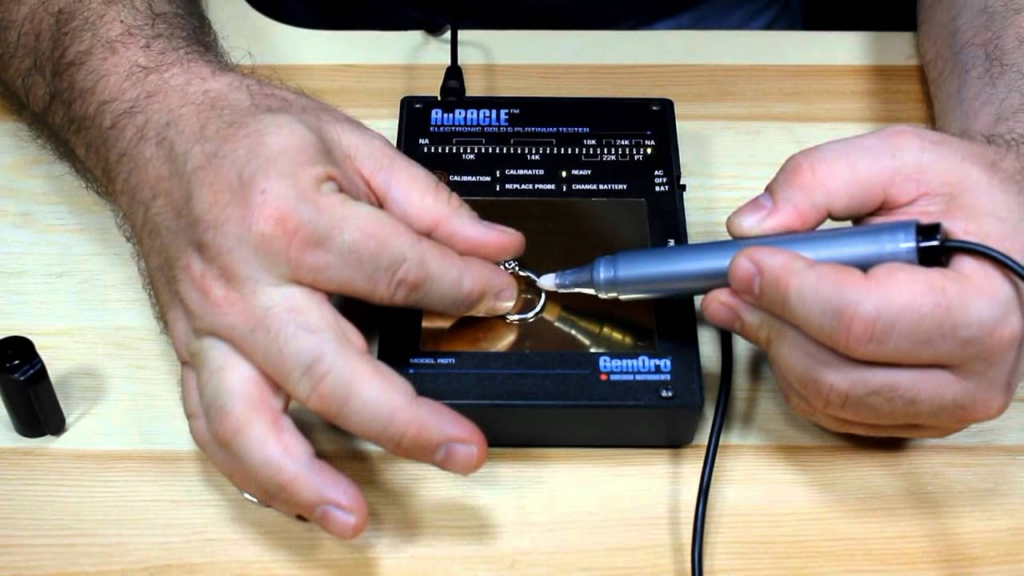
Quick Answer: The three professional tests measure metal rather than guess from behaviour. XRF reads the surface metals by X-ray in seconds without a mark. Acid testing scratches the piece and reads how the alloy reacts. Electronic testers check conductivity but can be fooled by thick plating. Most buyers combine more than one.
| Test | Strength | Limit |
|---|---|---|
| 8. XRF (X-ray) | Exact purity reading in seconds, no damage | Reads the surface; very thick plating needs a second check |
| 9. Acid test | Cheap, works on any alloy | Leaves a scratch; needs an experienced hand |
| 10. Electronic tester | Fast and portable | Rough estimate; thick plating can pass as gold |
One correction to common claims: XRF does not see through to the core. It reads the outer layer, so buyers add a density check or test below the surface when a piece looks suspicious. The full counter sequence is in our in-store gold testing guide.
8How Much Could a Fake Cost You?
Quick Answer: If a piece sold as solid 916 is really plated, almost all of its value disappears. At an illustrative RM 540 per gram of pure gold, a solid 20 g bangle holds about RM 9,893 of gold, a 1/20 14K gold-filled copy about RM 316, and a plated copy close to nothing.
| Item | Solid 916 | Gold-filled (1/20 14K) | Gold-plated | Value at risk if plated |
|---|---|---|---|---|
| Pair of earrings (2 g) | RM 989 | RM 32 | About RM 0 | RM 989 |
| Pendant (5 g) | RM 2,473 | RM 79 | About RM 0 | RM 2,473 |
| Ring (8 g) | RM 3,957 | RM 126 | About RM 0 | RM 3,957 |
| Bangle (20 g) | RM 9,893 | RM 316 | About RM 0 | RM 9,893 |
| Necklace (30 g) | RM 14,839 | RM 474 | About RM 0 | RM 14,839 |
| Wedding set (50 g) | RM 24,732 | RM 790 | About RM 0 | RM 24,732 |
Illustrative scenario by AnyGold, 2026, at RM 540 per gram pure gold. Gold-filled assumes 5% of weight is 14K gold. Gold value before any buyer margin. Not today’s price. Licence.
A pair of earrings is a small risk; a wedding set bought privately is a five-figure one. For where to have it checked, see our guide to the signs of a trusted gold buyer in Malaysia.
Holding a piece you are unsure about?
Send us a photo of the stamp and a rough weight on WhatsApp, then bring it in for a free X-ray reading. Ask us about your gold →
9How Do You Spot a Fake 999.9 Gold Bar?
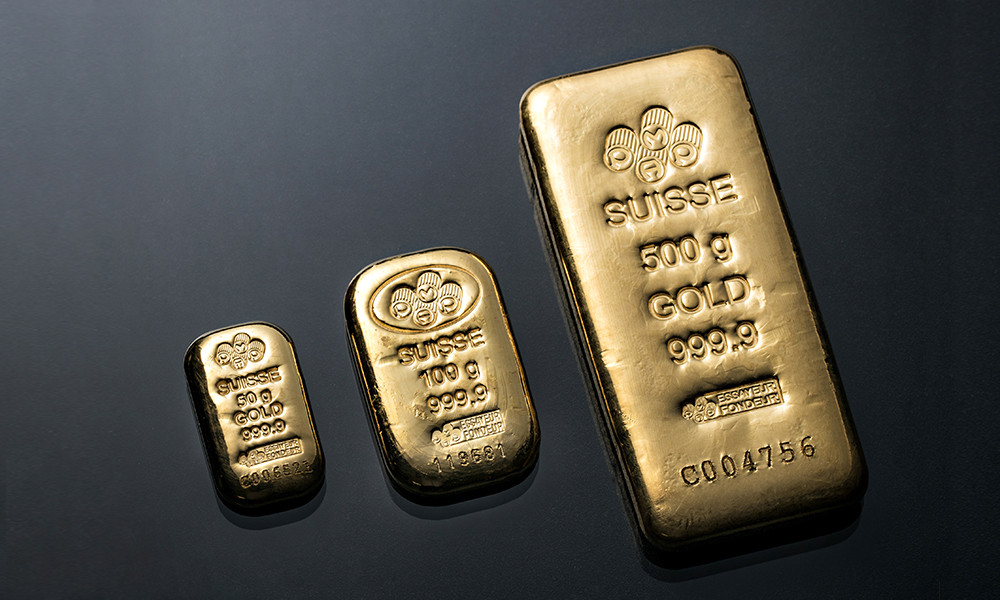
Quick Answer: A fake 999.9 bar usually fails on size, not looks. Real gold is so dense that a brass bar of the same weight is more than twice as big. Tungsten is the exception: it is almost exactly as dense as gold, so a tungsten-core bar matches in weight and size and needs professional checks to expose.
| Bar weight | Real gold (19.32 g/cm³) | Tungsten (19.25 g/cm³) | Brass (8.5 g/cm³) |
|---|---|---|---|
| 1 g | 0.052 cm³ | 0.052 cm³ (+0.4%) | 0.118 cm³ (+127%) |
| 5 g | 0.259 cm³ | 0.260 cm³ (+0.4%) | 0.588 cm³ (+127%) |
| 10 g | 0.518 cm³ | 0.519 cm³ (+0.4%) | 1.176 cm³ (+127%) |
| 20 g | 1.035 cm³ | 1.039 cm³ (+0.4%) | 2.353 cm³ (+127%) |
| 50 g | 2.588 cm³ | 2.597 cm³ (+0.4%) | 5.882 cm³ (+127%) |
| 100 g | 5.176 cm³ | 5.195 cm³ (+0.4%) | 11.765 cm³ (+127%) |
| 1 oz (31.1 g) | 1.610 cm³ | 1.616 cm³ (+0.4%) | 3.659 cm³ (+127%) |
Calculated by AnyGold, 2026, from approximate reference densities. Real bars vary slightly with shape and stamping. Licence.
For bars, check four things before you pay:
- Refiner and serial. Bars from refiners on the LBMA Good Delivery list carry a refiner mark, purity and often a serial number.
- Size against weight. A bar that looks too large for its stated weight is not gold.
- The price. Far below market from a private seller is the biggest warning sign.
Safest of all, buy 999.9 gold bars from an established counter.
10A Safe Order for Testing Gold at Home
Quick Answer: Test gold at home from the gentlest check to the harshest, and stop as soon as you have a clear answer. Read the stamp, try the magnet, compare the weight, then check for wear. Skip the scratch and acid tests on pieces you value and take them for a free professional reading instead.
- Read the stamp. Use a phone camera zoom. GP, HGE or GF ends the test.
- Try a strong magnet. Test the links, not the clasp spring.
- Compare the weight. Hold it against a piece you know is real.
- Look for wear. Check edges and clasps for a different colour showing through.
- Get a professional reading. Book a free, non-destructive test before you buy, sell or insure.
If you would rather read this guide in Malay, see cara beza emas asli dan palsu (in Bahasa Melayu).
11When Should You Get a Professional Gold Test?
Quick Answer: Get a professional test whenever money is about to change hands: before you buy gold privately or online, before you sell or insure, and whenever home results disagree. A good buyer tests in front of you, explains the reading and lets you leave without selling.
- Before buying privately or online. Test before you pay; walk away if the seller refuses.
- Before selling. You are paid on tested purity and net weight, not the stamp.
- When home results conflict. A magnet pass with a dark streak needs a real reading.
At AnyGold the X-ray test is free, done in front of you, and needs no receipt. Bring your IC to sell, as buyers must identify sellers under customer due diligence rules.
12Conclusion: Use Home Tests to Screen, Not to Decide
How to know fake gold starts at home: the stamp, a magnet and a weight check catch the crude fakes for free. They will not catch plating, gold-filled pieces or tungsten-core bars, and some tests can harm real gold. When it matters, a free X-ray reading settles it in seconds.
AnyGold tests and buys gold of every purity from 999.9 to 375 at LG.142 Sungei Wang Plaza, Bukit Bintang. Read the AnyGold FAQ before you visit.
13Frequently Asked Questions
1. Does real gold stick to a magnet?
No. Gold is not magnetic. If a piece sticks to a strong magnet it contains iron or steel, but many fakes are not magnetic either, so passing proves little.
2. Is the water float test reliable?
No. Real gold sinks, but so do brass, copper and tungsten. Only plastic or hollow fakes float, so the test rules out very little.
3. Can vinegar damage real gold?
Solid gold is not harmed, but vinegar can dull pearls, some stones and glued settings, and it misses most plated fakes.
4. Can a gold stamp be faked?
Yes. Fakers stamp 916 or 999 on plated metal, and some real gold is stamped higher than its true purity. Treat a stamp as a claim to be tested.
5. Where can I test gold for free in Kuala Lumpur?
AnyGold at LG.142 Sungei Wang Plaza X-ray tests gold for free in front of you, with no obligation to sell.
Not sure if your gold is real?
Visit AnyGold at LG.142 Sungei Wang Plaza, Bukit Bintang. We test it in front of you, explain the reading and quote at the live rate only if you want to sell.
Contact AnyGold today →