916 vs 999 Gold in Malaysia: Purity Guide to Buy and Sell
Last updated: 25 November 2026
1What Is the Difference Between 916 and 999 Gold?
Quick Answer: The difference between 916 and 999 gold is the share of pure gold. 999 gold holds 999 parts gold per 1,000, while 916 holds 916 parts and fills the rest with metals such as silver, copper and zinc. That small gap changes the colour, the hardness, the price per gram and what you get back.
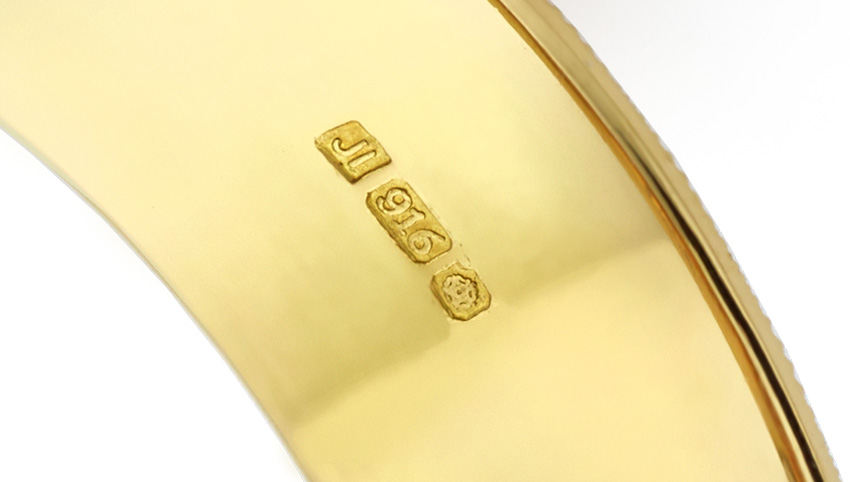
Look inside a ring or near a clasp and you will usually find a small number: 999, 916, 750 or 375. That stamp decides how a piece wears, what it costs, and what a buyer pays you later.
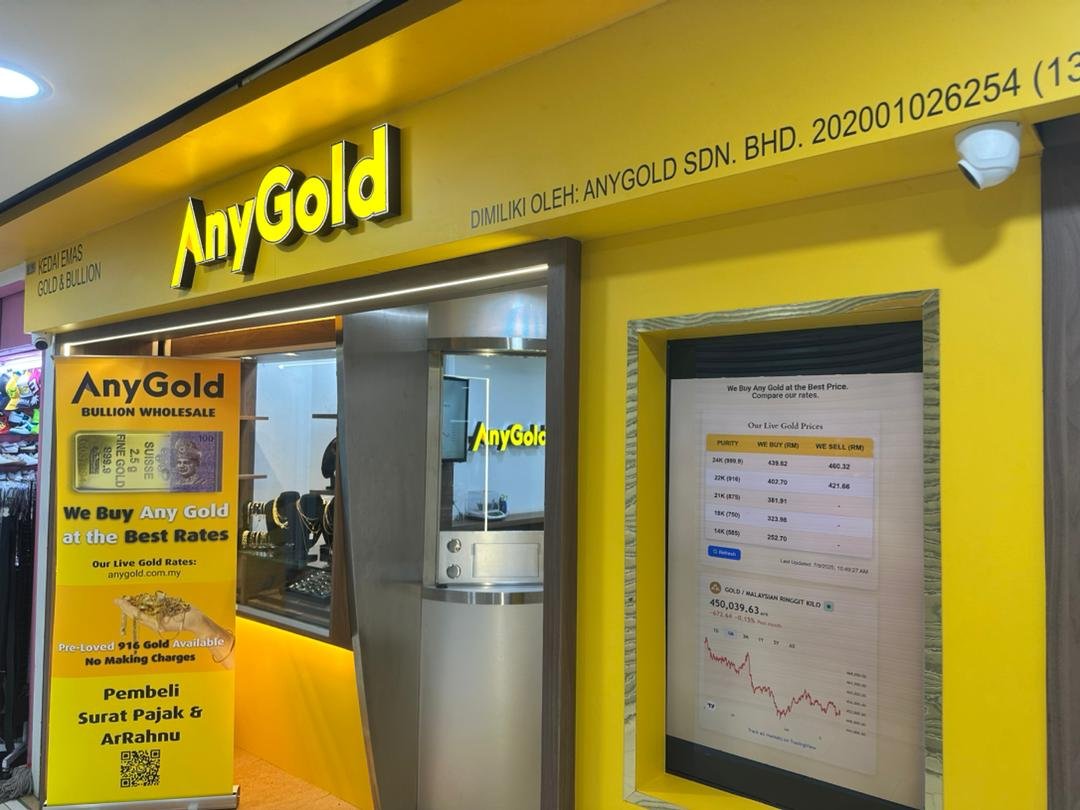
This guide is written by AnyGold, a Kuala Lumpur gold buyer at Sungei Wang Plaza that buys every purity from 999.9 down to 375 and sells pre-loved jewellery and gold bars. It explains what the numbers mean, how 916 and 999 compare, which purity suits which goal, and how purity is tested and paid.
Every example uses a fixed illustrative rate of RM 540 per gram of pure gold, not today’s price.
Not sure which purity your gold is?
Bring it in and we X-ray test it for free in front of you, so you see the real reading before you decide anything. Book a free purity test →
2What Do Gold Purity Numbers Like 999, 916 and 750 Mean?
Quick Answer: A gold purity number is parts of pure gold per 1,000. 999 means 99.9% gold, 916 means 91.6%, 750 means 75% and 375 means 37.5%. Karat is the older scale out of 24, so 24K is 999, 22K is 916 and 18K is 750. Both describe the same thing.
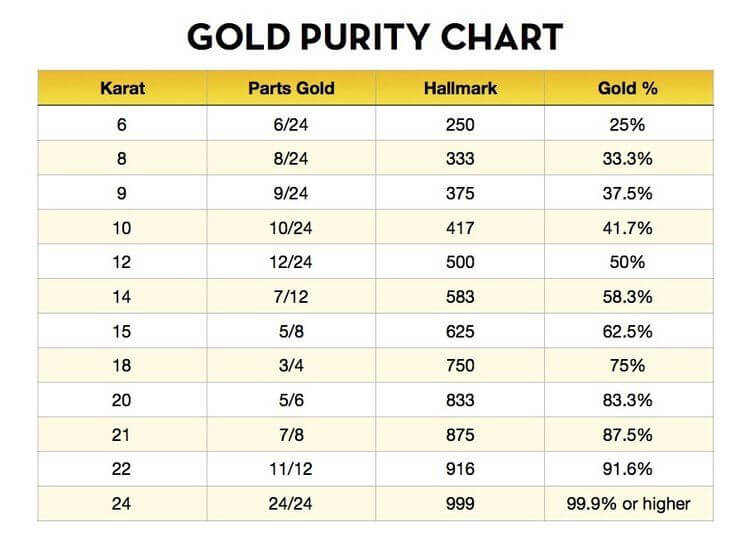
| Stamp | Karat | Pure gold | Common in Malaysia |
|---|---|---|---|
| 999.9 | 24K | 99.99% | Gold bars and bullion coins |
| 999 | 24K | 99.9% | Chains, bangles, Chinese wedding gold |
| 916 | 22K | 91.6% | Most local jewellery |
| 835 | 20K | 83.5% | Older family pieces |
| 750 | 18K | 75% | Diamond rings, white and rose gold |
| 585 | 14K | 58.5% | Imported and fashion pieces |
| 375 | 9K | 37.5% | Budget and imported jewellery |
A few marks surprise people. Fourteen karat should work out to 583, yet most pieces are stamped 585. The World Gold Council explains that makers adopted the European habit of going slightly above 14/24. The same source notes gold can only be refined to about 999.9 parts per thousand, which is why “pure” bars carry 999.9 rather than 1000.
Stamps such as GP, GF or HGE mean gold-plated or gold-filled, not solid gold. Our guide on how to know fake gold covers those marks in more detail.
3Why Is Gold Mixed With Other Metals?
Quick Answer: Pure gold is too soft for most jewellery. It scratches, bends and loses stones. Mixing in other metals, called alloying, makes gold harder, lets it hold fine designs and settings, and changes its colour. The trade-off is less gold per gram, which lowers the value of each gram you own.
The World Gold Council lists a typical yellow 22K alloy as 91.7% gold, 5% silver, 2% copper and 1.3% zinc. Each added metal has a job:
- Copper adds hardness and a warmer tone; more copper gives rose gold.
- Silver adds strength and a paler yellow.
- Zinc helps the alloy cast cleanly.
- Palladium or nickel turn gold white.
4How Much Gold Is Really in Each Purity?
Quick Answer: In 10 g of jewellery, 999 gold holds 9.99 g of pure gold, 916 holds 9.16 g, 750 holds 7.50 g and 375 holds just 3.75 g. At an illustrative RM 540 per gram of pure gold, that puts the gold value of one gram at about RM 539 for 999, RM 495 for 916 and RM 203 for 375.
| Purity | Gold (yellow) vs alloy (grey) | Gold in 10 g | Alloy in 10 g | Gold value per gram |
|---|---|---|---|---|
| 999.9 (24K) | 99.99% gold | 10.00 g | 0.00 g | RM 539.95 |
| 999 (24K) | 99.90% gold | 9.99 g | 0.01 g | RM 539.46 |
| 916 (22K) | 91.60% gold | 9.16 g | 0.84 g | RM 494.64 |
| 835 (20K) | 83.50% gold | 8.35 g | 1.65 g | RM 450.90 |
| 750 (18K) | 75.00% gold | 7.50 g | 2.50 g | RM 405.00 |
| 585 (14K) | 58.50% gold | 5.85 g | 4.15 g | RM 315.90 |
| 375 (9K) | 37.50% gold | 3.75 g | 6.25 g | RM 202.50 |
Illustrative scenario by AnyGold, 2026, at RM 540 per gram pure gold. Gold value before any buyer margin. Not today’s price. Licence.
Two pieces of the same weight can hold very different amounts of gold: a 10 g 375 bracelet holds less gold than a 5 g 916 chain. Compare grams of pure gold, not grams on the scale.
For the live rate at each purity, see our hub on the gold selling price in Malaysia, which keeps the daily numbers this guide leaves out.
5916 vs 999 Gold: Colour, Hardness and Daily Wear
Quick Answer: 999 gold is a deep, rich yellow and soft enough to dent or scratch with daily use. 916 gold is a slightly warmer, lighter yellow and noticeably harder, so it keeps its shape as a chain, bangle or ring. For pieces you wear every day, 916 lasts better; for pieces you store, 999 holds more gold.

| Feature | 999 gold (24K) | 916 gold (22K) |
|---|---|---|
| Colour | Deep, bright yellow | Warm yellow, slightly lighter |
| Hardness | Very soft; dents and scratches easily | Harder; handles daily wear |
| Typical items | Bars, coins, plain chains and bangles | Wedding sets, chains, bangles, rings |
| Best for | Saving and occasional wear | Wearing often while keeping high gold content |
Colour is a poor test on its own: lighting and polish can make a 916 bangle pass for 999. Trust the stamp, then a test.
If you would rather read this comparison in Malay, see perbezaan emas 916 vs 999 (in Bahasa Melayu).
6How Much More Gold Do You Get With 999 Than 916?
Quick Answer: 999 gold gives you 8.3 g more pure gold per 100 g than 916. At an illustrative RM 540 per gram of pure gold, that is about RM 448 more gold value on 10 g and RM 2,241 more on 50 g. The gap is small per gram but grows fast with weight.
| Weight | Gold in 999 | Gold in 916 | Extra gold in 999 | Value of the gap |
|---|---|---|---|---|
| 5 g | 5.00 g | 4.58 g | 0.42 g | RM 224 |
| 10 g | 9.99 g | 9.16 g | 0.83 g | RM 448 |
| 20 g | 19.98 g | 18.32 g | 1.66 g | RM 896 |
| 50 g | 49.95 g | 45.80 g | 4.15 g | RM 2,241 |
| 100 g | 99.90 g | 91.60 g | 8.30 g | RM 4,482 |
Illustrative scenario by AnyGold, 2026, at RM 540 per gram pure gold, before any buyer margin. Not today’s price. Licence.
This is the honest size of the 916 vs 999 gap: 8.3 grams of gold per 100 g, or about 9% more gold value per gram. It barely matters on a 5 g pendant but is real money on a 50 g wedding set, which is why savers choose 999 and wearers accept 916.
When you sell, the same gap shows up in the per-gram rate. Our guides to the 999 gold selling price and how to sell 916 gold walk through each one.
7Which Gold Purity Should You Buy: Investing, Daily Wear or Gifts?
Quick Answer: Buy 999.9 bars or 999 gold to store value, because nearly all your money goes into gold. Buy 916 jewellery to wear often, ideally pre-loved to skip workmanship. Choose 750 for diamond rings that need firm settings. Pick 375 or 585 only for fashion pieces, knowing they hold far less gold.
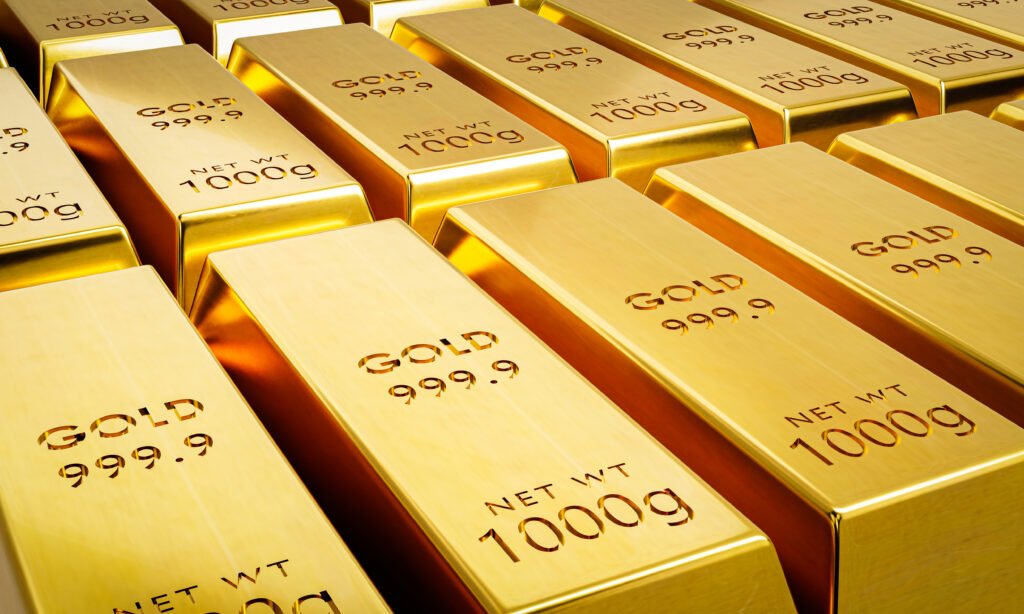

- Saving or investing: 999.9 gold bars carry the least markup over gold value and are simple to sell back.
- Jewellery you wear daily: 916 is the Malaysian standard. Pre-loved gold jewellery gives you the same gold without paying workmanship again.
- Engagement and diamond rings: 750 (18K) holds stones securely and resists scratches.
- Fashion pieces: 585 or 375 are hard-wearing and cheap per piece, but hold little gold per ringgit.
The price you pay is not only gold. Workmanship and shop margin sit on top, and they do not come back when you sell, as the next chart shows.
8What Does Each Purity Cost to Buy and Sell Back?
Quick Answer: In our 20 g example, a new 999.9 bar loses about 4.9% between buying and selling back, pre-loved 916 about 6.7%, new 916 jewellery about 14.2% and a new 750 ring about 18.4%. The gold is paid back each time; the workmanship and premiums are not.
| Item (20 g) | Price build-up | You pay | Sell-back value | Loss if sold back |
|---|---|---|---|---|
| New 999.9 gold bar | 2% premium | RM 11,015 | RM 10,475 | RM 540 (4.9%) |
| New 999 jewellery | RM 25/g workmanship + 4% | RM 11,721 | RM 10,466 | RM 1,255 (10.7%) |
| New 916 jewellery | RM 45/g workmanship + 4% | RM 11,189 | RM 9,596 | RM 1,592 (14.2%) |
| Pre-loved 916 jewellery | No workmanship, 4% margin | RM 10,289 | RM 9,596 | RM 692 (6.7%) |
| New 750 (18K) ring | RM 60/g workmanship + 4% | RM 9,624 | RM 7,857 | RM 1,767 (18.4%) |
Illustrative scenario by AnyGold, 2026, at RM 540 per gram pure gold, hypothetical workmanship and margins, and sell-back at 97% of gold value. Not today’s price or any shop’s actual charges. Licence.
A 750 ring loses most: the least gold and the highest workmanship per gram. A pre-loved 916 chain loses less than half as much as a new one, because nobody charges workmanship twice. Purity sets the gold you keep; the form sets the extras you lose.
If you plan to sell later, the cheapest way into a purity is usually the one with the smallest gap between price and what a buyer pays per gram.
Want to see the gold value of what you already own?
Send us your items, stamps and rough weights and we will give you an indication at the live rate, line by line. Ask for a purity-by-purity quote →
9Which Purity Gets Your Money Back Fastest When Gold Rises?
Quick Answer: Spend RM 10,000 on each form and sell back at 97% of gold value. A new 999.9 bar is back above RM 10,000 after a 5.2% rise in gold, pre-loved 916 after 7.2%, new 916 jewellery after 16.6% and a new 750 ring only after 22.5%.
| RM 10,000 in | Gold bought | Gold flat | Gold +5% | Gold +10% | Gold +20% | Rise to break even |
|---|---|---|---|---|---|---|
| New 999.9 gold bar | 18.16 g | RM 9,510 | RM 9,985 | RM 10,461 | RM 11,412 | +5.2% |
| New 999 jewellery | 17.06 g | RM 8,929 | RM 9,375 | RM 9,822 | RM 10,715 | +12.0% |
| New 916 jewellery | 17.88 g | RM 8,577 | RM 9,006 | RM 9,434 | RM 10,292 | +16.6% |
| Pre-loved 916 jewellery | 19.44 g | RM 9,327 | RM 9,793 | RM 10,260 | RM 11,192 | +7.2% |
| New 750 (18K) ring | 20.78 g | RM 8,164 | RM 8,572 | RM 8,980 | RM 9,797 | +22.5% |
Illustrative scenario by AnyGold, 2026, at RM 540 per gram pure gold, hypothetical workmanship and margins, and sell-back at 97% of gold value. Bold = above the RM 10,000 spent. Not a forecast. Licence.
The lower the markup, the more of each ringgit went into gold, so the sooner you recover. Pre-loved 916 buys more grams than a new bar and, with no workmanship, recovers almost as quickly. Gold can also fall, so this is not a forecast. For how rates are set, see our gold selling price guide.
10How Do Gold Shops Test Purity: XRF, Acid or Density?
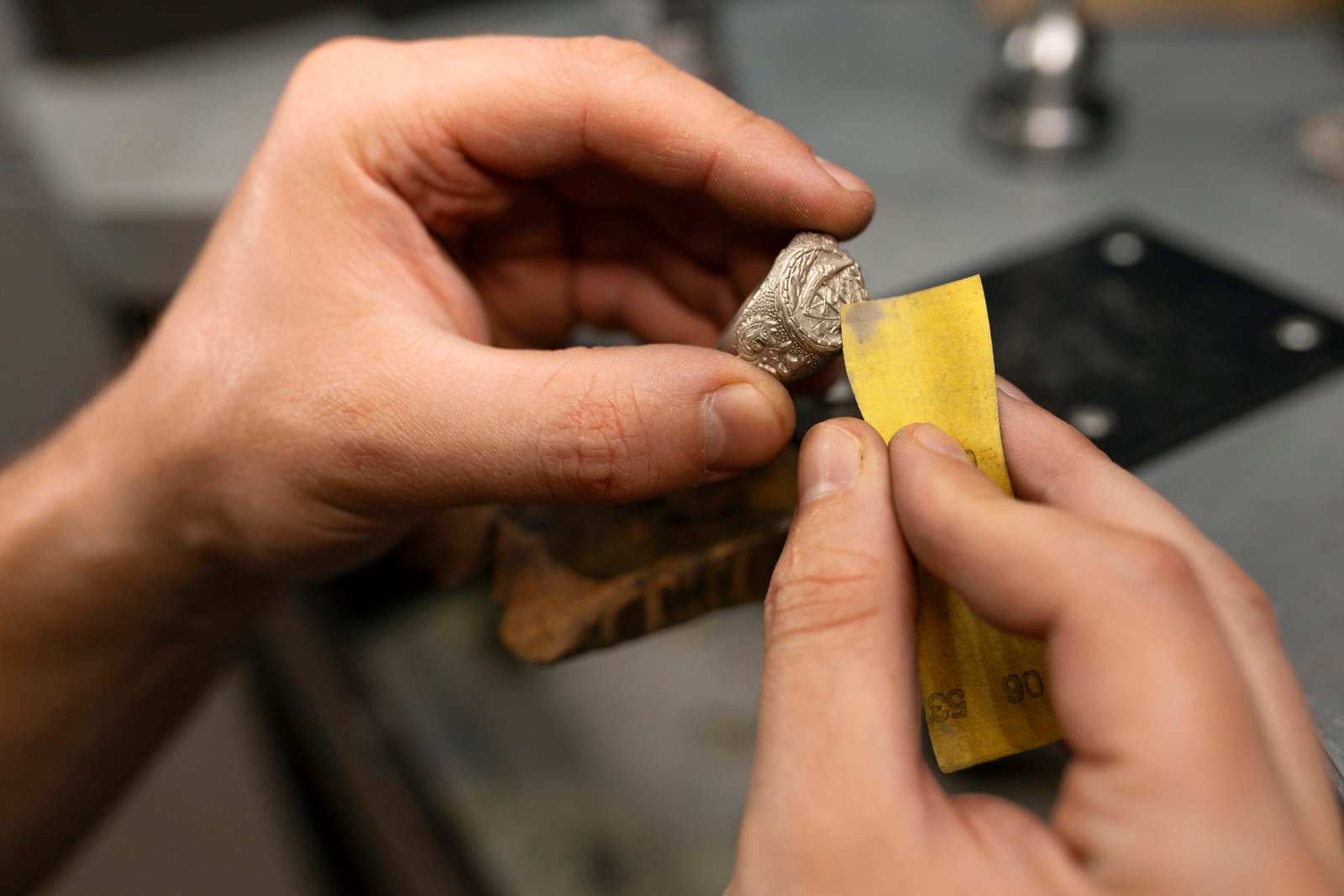
Quick Answer: Most gold buyers test purity with XRF, an X-ray reading that takes seconds and leaves no mark. Acid testing scratches the piece and is less precise. Density testing compares weight in air and water and suits plain solid items. A good buyer tests in front of you and shows the reading before pricing.

| Method | How it works | Marks the gold? | Best for |
|---|---|---|---|
| Stamp check | Read the mark | No | A first clue; stamps can be faked |
| XRF (X-ray) | X-rays read the surface metals | No | Fast, exact readings |
| Acid test | Scratch, then apply acid | Yes, a small scratch | Rough karat range |
| Density test | Weigh in air and in water | No | Plain solid pieces and bars |
XRF reads the surface, so thick plating over a base metal needs a second check. The full in-store sequence is set out in our guide to checking if gold is real.
At AnyGold the X-ray test is free and done in front of you, with no obligation to sell.
11How Does Purity Change What You Get When You Sell?
Quick Answer: When you sell, purity sets your rate per gram. A buyer weighs the gold, removes non-gold parts, tests it, then multiplies net weight by the rate for the tested purity. A piece stamped 916 that tests as 835 is paid as 835.
- Sort by purity. Keep 999, 916 and 750 pieces apart so each is priced on its own line.
- Weigh and remove non-gold parts. Stones, springs and other metals come off before pricing.
- Test the purity. You are paid on the reading, not the stamp.
- Apply the rate for that purity. Net weight × the live rate for the tested purity gives the payout.
Trade scales fall under the Weights and Measures Act 1972, and gold buyers must identify sellers under customer due diligence rules, so bring your IC. You do not need the original receipt.
12Conclusion: Buy for the Purpose, Sell on the Reading
The 916 vs 999 gold choice is a trade between gold content and toughness. 999 holds about 9% more gold per gram and suits saving; 916 wears better and suits daily jewellery. Whatever you choose, keep the markup low, because only the gold comes back when you sell.
AnyGold buys every purity from 999.9 to 375 and sells pre-loved jewellery and gold bars at LG.142 Sungei Wang Plaza. Read the AnyGold FAQ for what to bring.
13Frequently Asked Questions
1. Is 916 gold real gold?
Yes. 916 gold is 91.6% pure gold mixed with harder metals such as silver, copper and zinc. It is the most common purity for jewellery in Malaysia.
2. Which is better, 916 or 999 gold?
Neither is better for everyone. 999 holds more gold and suits saving, while 916 is harder and suits jewellery you wear often.
3. Is 999 gold the same as 24K?
Yes. 999 and 999.9 are both 24K. 999.9 bars are slightly purer, but per gram the value is almost the same.
4. Why does my 916 bangle look like 999?
Colour depends on the alloy, polish and lighting, so 916 and 999 can look alike. The stamp and a purity test tell them apart.
5. Can I get my gold tested without selling it?
Yes. AnyGold X-ray tests gold for free in front of you, and you decide afterwards whether to sell.
Ready to find out what your gold is really worth?
Visit AnyGold at LG.142 Sungei Wang Plaza, Bukit Bintang. We test every purity in front of you and pay at the live rate for the reading.
Contact AnyGold today →